Google Antigravity: The Agentic IDE That Replaces Your Entire Dev Team
For two years, "AI coding" meant the same degrading loop. You write code. You get an error. You paste it into Claude or ChatGPT. You copy the fix. You get a different error. Rinse, repeat. The AI was a glorified autocomplete living inside your text editor. You still did all the cognitive work.
That era is over. Google just dropped something called Antigravity, and it does not fit inside the "AI assistant" category. Watch the full breakdown here:
Antigravity is an agentic development platform. The distinction matters. A code assistant waits for you to ask it something and gives you a response. An agentic platform receives a goal, builds a plan, executes across multiple surfaces simultaneously, and produces a verified, working result. You type "build me a login page" and walk away.
What Makes This Different From Everything Else
Every AI coding tool on the market today operates within a single surface. Copilot lives in your editor. Claude Code lives in your terminal. You still context-switch constantly: copy error, paste to AI, copy fix, paste back, run again, repeat.
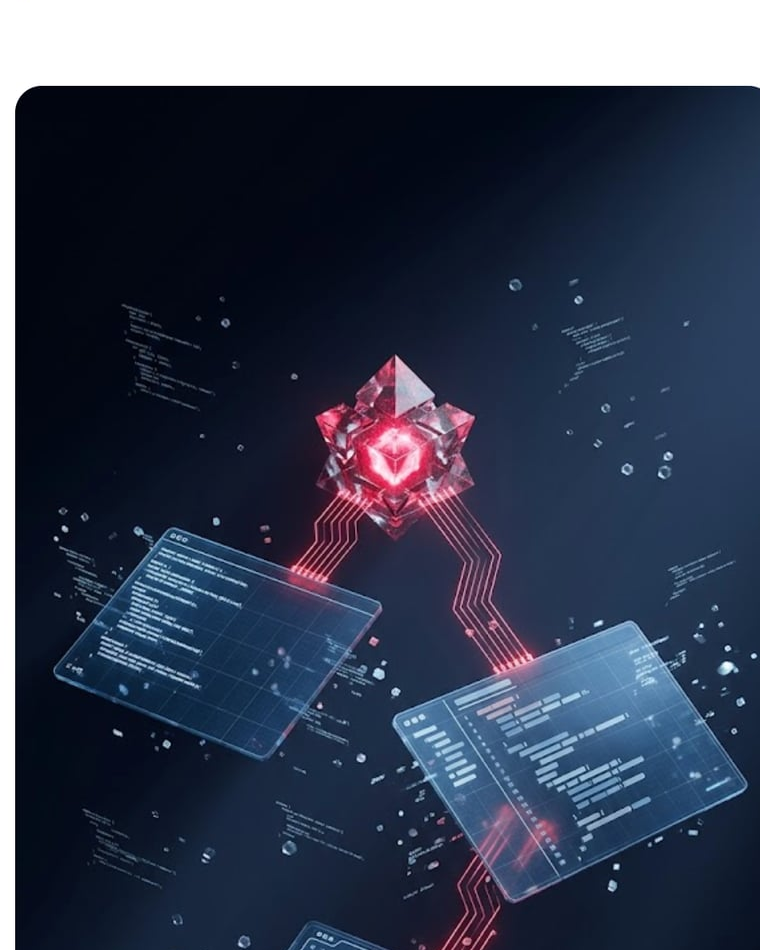
Antigravity has synchronized control over your code editor, your terminal, and your web browser simultaneously. Here is what that actually looks like in practice:
- You tell it what to build
- It writes the code in your editor
- It opens your terminal, installs dependencies, and spins up a local server
- It opens a live browser preview and tests the UI itself
- It adjusts CSS based on what it literally sees on screen
- If something looks wrong, you click the element in the browser and type what you want changed. It fixes it in real time.
The comparison to Claude Code is direct and brutal. With Claude, if you want any kind of oversight or mission control, you have to build it yourself. And if Claude builds the mission control, you then spend an hour debugging the thing it built to watch itself. Anyone who has used Claude for a complex multi-file project knows the bug audit loop: you ask it to check for bugs, it finds some, fixes them, you ask again, it finds more, the cycle never quite ends.
Antigravity addresses this architecturally with a feature called Mission Control.
Mission Control: The Safety Layer That Changes the Calculus
The obvious concern with giving an AI agent access to your terminal is catastrophic data loss. A rogue autonomous process that drops your production database is not a theoretical risk. It has happened to real teams.
Google built Mission Control to solve this. Rather than running wild in the background, Antigravity forces every agent to present clear artifacts and comprehensive verification tests before it merges anything. The agent proves to you that the code works first. You review. You approve. Then it ships.
Think of it as having a junior developer who hands you a detailed code review and test results before they touch production. They can execute autonomously on a task, but nothing lands in your main branch without your sign-off.
For small business owners worried about AI making an irreversible mistake in their systems, Mission Control is the answer. You are not handing the keys to the machine. You are staying in the editor-in-chief seat while the agent handles the actual construction.
What Is Under the Hood
Antigravity is powered by three models working in concert:
- Gemini 3.1 Pro for heavy lifting — architecture decisions, complex logic, full feature builds
- Gemini 3 Flash for fast edits — CSS tweaks, quick iterations, real-time visual feedback
- Nano Banana Pro — Google's specialized model designed specifically for this agentic workflow
The combination means you get the reasoning power of a frontier model for complex decisions and the speed of a lightweight model for the constant micro-adjustments that make agentic UI work actually usable in real time.
It is available to download now at no charge for developers at antigravity.google. The Linux version is the primary release, with Mac and Windows versions available. An enterprise edition with enhanced security and collaboration features is on the roadmap.
Two Ways Small Businesses Can Use This Right Now
If you run a business with 5 to 50 employees and you are not a developer yourself, here is the honest answer on what Antigravity means for you.
You probably cannot sit down and use it directly without some technical foundation. But you do not need to. The value is in what it does to the cost structure of getting software built. Two use cases stand out immediately.
Building Custom Internal Tools
Most small businesses tolerate terrible software because custom development is expensive. You are paying $10,000 to $50,000 for something an agency builds over six weeks, and you live with whatever they deliver because changing it costs more money.
With Antigravity, that equation shifts. Take an e-commerce brand that hates its inventory software. You open Antigravity, hand it your Shopify API key, and tell it: "Build me a custom dashboard that connects to my Shopify store and highlights low inventory items in red." The agent writes the backend, designs the frontend, spins it up in the browser, and tests the live data connection.
You act as the product manager, reviewing what it builds, directing changes, and approving the final result. The total development time drops from weeks to hours. The cost drops from agency rates to the time of someone comfortable enough to supervise the agent.
Other high-value internal tool targets for SMBs:
- Custom reporting dashboards pulling from your existing CRM or accounting software
- Employee onboarding portals that automate paperwork collection and account provisioning
- Client-facing intake forms with automated routing logic
- Internal pricing calculators or quote generators for sales teams
Rapid Website Iteration and A/B Testing
Every week your landing page converts at 2% instead of 3% costs you real money. Waiting for a web developer to update your site, waiting for them to have bandwidth, waiting for the revision cycle, that friction is what keeps most small business websites stale and underperforming.
Antigravity eliminates that bottleneck through its visual feedback loop. You open the live preview of your site, click directly on the element you want changed, and describe what you want. "Redesign this pricing section to look better on mobile and make the buy button pop." The agent handles the CSS and tests it in real time. You see the result in the browser before anything ships.
A single junior developer or a technically comfortable business owner can run continuous iteration on a landing page in a way that previously required an agency retainer. The compounding SEO and conversion benefits of a site that actually gets updated regularly are significant.
The Honest Assessment: What This Does Not Change
Antigravity is not magic and it is not a replacement for strategic thinking. It is a powerful execution tool for people who know what they want to build.
If you hand it a vague requirement, you will get a vague result. The garbage-in, garbage-out principle holds. The business owners who will get the most out of this tool are the ones who can articulate their requirements precisely: "I need a dashboard that shows X data, formatted Y way, pulling from Z system." The clearer the brief, the more accurately the agent executes.
It also still requires some technical environment to run. You need a machine where you can install software and manage API keys. For businesses with zero technical staff, this is a tool best accessed through a consultant rather than directly.
And the enterprise version is not here yet. For businesses with strict data governance requirements, the full security architecture you need is coming, but not fully available today on the consumer version.
What This Means for the AI Consulting Landscape
We have been tracking agentic development tools closely at fAIceless, and Antigravity represents a meaningful acceleration in the timeline for SMB software democratization.
The traditional agency model for small business software development, slow, expensive, and iteratively inflexible, is under real pressure now. A skilled AI-fluent consultant using Antigravity can do in a week what previously took a three-person development team a month. That cost compression reaches SMBs directly as more affordable custom tooling.
The businesses that move fast on this will build internal tooling advantages over competitors who are still waiting six months for agency availability. The businesses that ignore it will find themselves paying legacy rates for work that has fundamentally changed in cost structure.
fAIceless has already saved over $3 million in billable hours for the SMBs we work with by implementing the right AI tools at the right time. Antigravity is going on that list.
Get the fAIceless Brief
One tool, one insight, zero fluff. Every week we cover what actually matters in AI for business owners who do not have time to follow everything.
Subscribe FreeWatch the Full Video and Download Antigravity
The full tutorial, including a live walkthrough of the cross-surface agent workflow and both business use cases in action, is on the fAIceless YouTube channel. Watch: Google Just DESTROYED Competition | (Antigravity Tutorial).
Download Antigravity directly at antigravity.google. Linux is the primary release today, with Mac and Windows versions available and an enterprise edition in development.
If you want to know whether Antigravity is the right fit for your specific business workflows, book a free AI Readiness Audit with our team. We will map your current processes, identify where agentic development tools can cut costs immediately, and give you a clear implementation path that does not require a massive dev team or a six-figure budget.
Get the fAIceless Brief
One AI tip. One case study. One tool. Every week.